
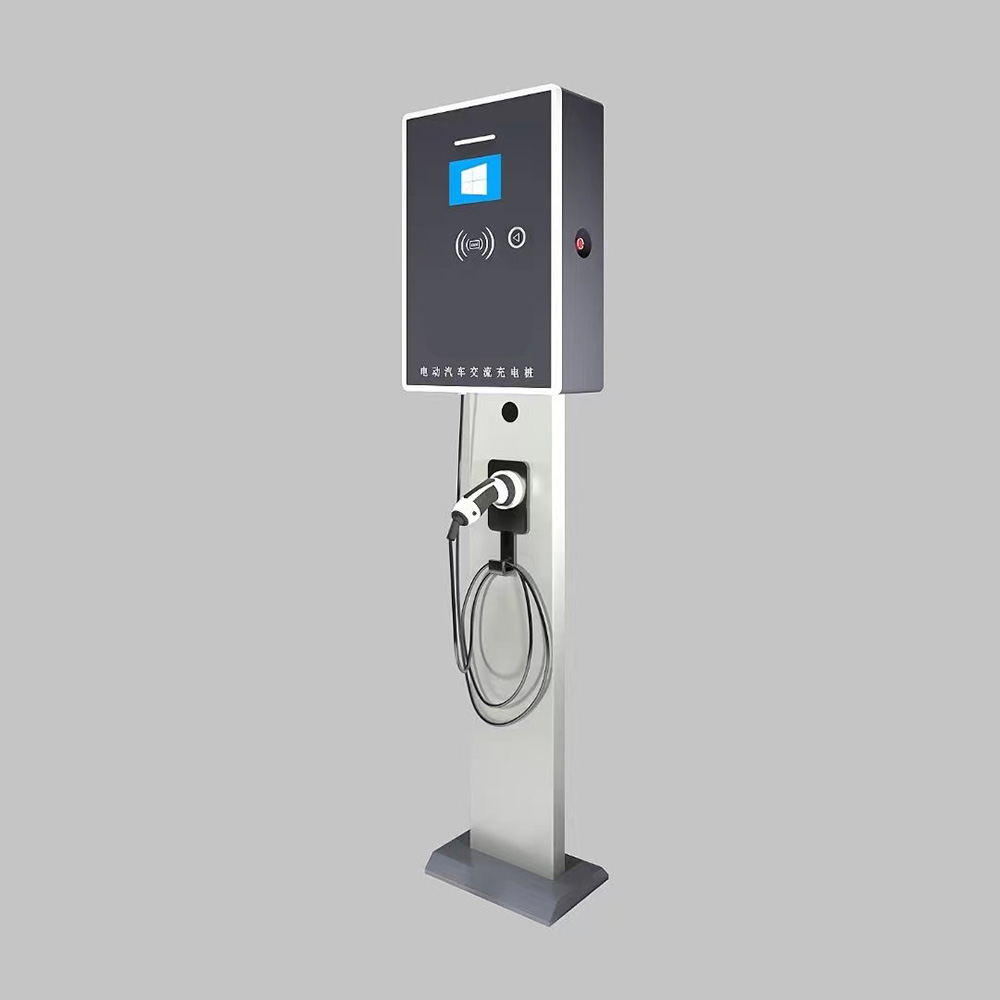
In a significant advancement for the renewable energy and electric vehicle markets, a newly developed IP55-rated EV charging station is set to enhance the integration of sustainable technologies across urban and rural environments. This state-of-the-art charging station, designed to withstand dust and water ingress according to the International Protection Marking (IP) standards, aligns perfectly with the increasing demand for resilient, efficient, and eco-friendly energy solutions.
This innovation is particularly timely as electric vehicles (EVs) continue to gain popularity worldwide, driven by rising environmental concerns and supportive government policies. The IP55 rated EV charging station ensures reliable operation in diverse weather conditions, making it ideal for outdoor and industrial applications where protection against dust and water spray is crucial.
**Reliable Performance Through Robust Design**
An IP55 rating signifies that the charging station is dust protected and can resist water jets projected from any direction, guaranteeing operational reliability even in harsh environments. For EV owners and fleet operators, this means reduced maintenance costs and fewer disruptions.
Designed with user convenience and safety in mind, the charging station incorporates multiple safety features, including overload protection, temperature sensors, and smart charging protocols that optimize battery health. Its compatibility with various EV models enhances versatility, while a user-friendly interface allows for seamless interaction and efficient energy management.
**Synergy with Solar Power Systems**
The emergence of such robust EV chargers complements the expanding solar energy market, particularly in regions embracing green infrastructure. One key contributor to this sector’s growth is Jiujiang Xingli Beihai Composite Co., Ltd., a leading Chinese manufacturer specializing in the production of high-quality solar batteries and solar modules.
From their cutting-edge monocrystalline and polycrystalline solar panels to comprehensive on-grid and off-grid solar power systems, Jiujiang Xingli Beihai Composite Co., Ltd. boasts extensive expertise in delivering sustainable energy solutions. Their products are renowned for high conversion efficiency, durability, and adaptability across various climatic conditions.
The integration of solar power systems with IP55 EV charging stations offers a pathway to achieving zero-emission transportation ecosystems. By harnessing solar energy for EV charging, users can significantly reduce carbon footprints while advancing energy independence. This synergy is particularly advantageous in off-grid locations where traditional power infrastructure may be insufficient or unreliable.
**Jiujiang Xingli Beihai Composite Co., Ltd.: Pioneering Sustainable Energy**
Located in China, Jiujiang Xingli Beihai Composite Co., Ltd. has established itself as one of the nation's premier suppliers of solar panels and energy systems. Their specialty lies in delivering comprehensive solutions that cater to both residential and commercial customers.
The company’s on-grid systems provide seamless integration with existing electrical grids, allowing users to feed surplus power back to the utility company, thereby generating income or offsets on electricity bills. Conversely, their off-grid systems empower remote communities and facilities with reliable energy access, promoting socio-economic development.
Moreover, their solar batteries are engineered to store excess solar energy efficiently, ensuring consistent power availability even during nighttime or cloudy conditions. Such capabilities are instrumental in supporting EV charging stations, ensuring continuous operation without overdependence on the grid.
**Toward a Greener Future**
The combination of rugged EV charging infrastructure rated IP55 and robust solar energy systems signals a decisive step toward sustainable mobility. As governments and corporations worldwide commit to ambitious emissions reduction targets, innovations like these are critical enablers of the green transition.
End-users, including fleet managers, municipal authorities, and private EV owners, stand to benefit immensely from this advancement. Not only do they gain access to reliable and weather-resistant charging solutions, but they also contribute actively to environmental conservation by utilizing renewable energy.
In addition, the scalability of these technologies ensures that the benefits extend beyond individual users to entire communities. Solar-powered EV charging hubs can be deployed in public spaces, commercial centers, and rural regions, fostering greater EV adoption and reducing reliance on fossil fuels.
**Conclusion**
The development of an IP55-rated EV charging station marks a milestone in the evolution of electric mobility and renewable energy integration. Combined with the expertise and products provided by leading solar system manufacturers such as Jiujiang Xingli Beihai Composite Co., Ltd., the future of clean energy and sustainable transportation looks promising.
By leveraging durable, efficient charging infrastructure and high-quality solar solutions, stakeholders can accelerate the transition toward a low-carbon economy. This aligns with global sustainability goals and reinforces the role of innovation in shaping an environmentally responsible future.
The collaboration between advanced EV charging technologies and solar photovoltaic systems exemplifies the opportunities inherent in harmonizing different green technologies—creating an ecosystem where smart energy management meets mobility needs head-on.
As the world embraces these changes, continuous research, manufacturing excellence, and strategic deployment will be essential to fulfilling the vision of accessible, clean, and resilient energy for all.